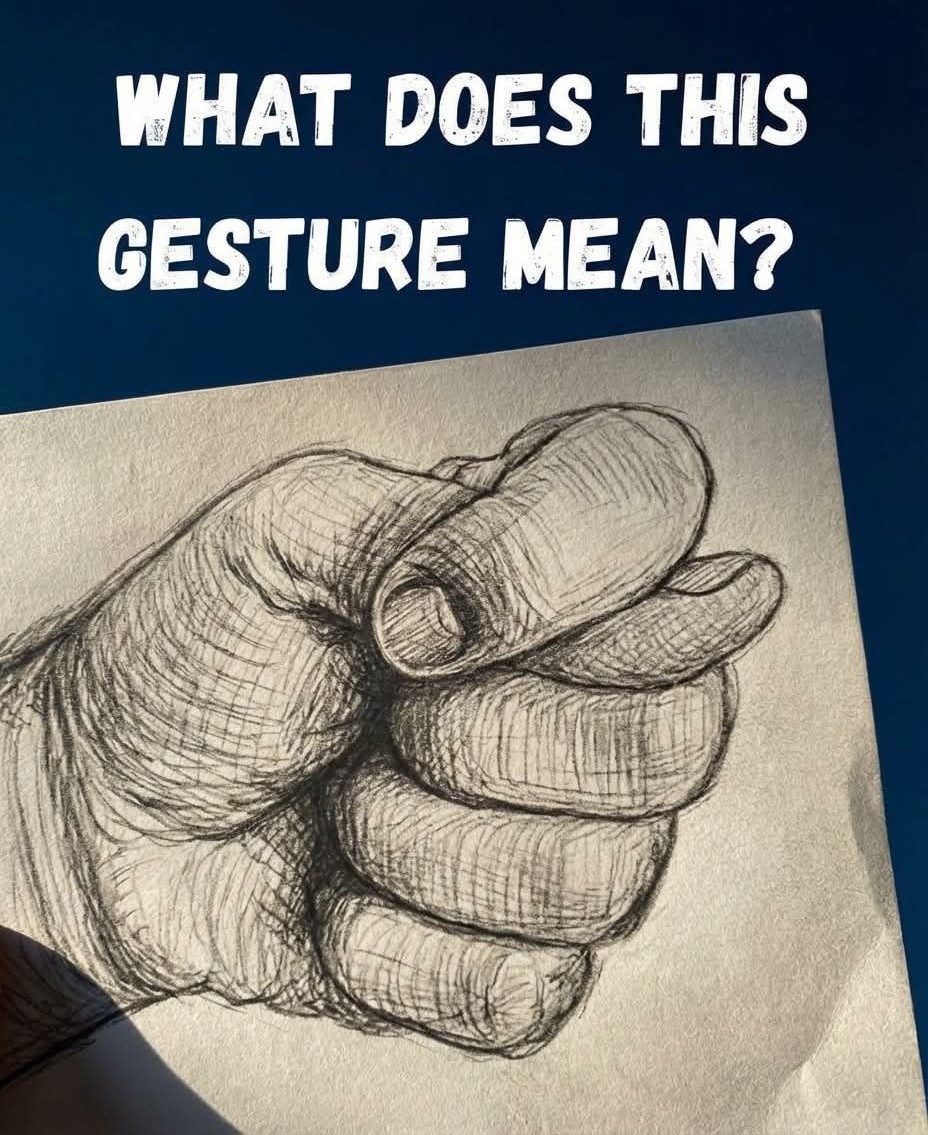
It was especially useful in navigating minor power struggles, unreasonable requests, or social teasing while keeping the atmosphere calm.
Protection, Luck, and Symbolism
Beyond everyday communication, the fig gesture held deeper symbolic meaning.
In various traditions, the closed hand represented inner strength, while the thumb hidden between the fingers symbolized protection. Many believed it could ward off bad luck, envy, or unwanted attention.
Some communities even used it as a small protective charm—displayed subtly in moments of uncertainty or farewell.
A Gesture Passed Through Families
Over time, the fig gesture moved from serious symbolism into family life and playful culture.
Elders taught it to children during games and jokes. It became part of light teasing, affection, and shared understanding. In emotional moments—goodbyes at doors, train stations, or long journeys—it sometimes served as a quiet sign of reassurance when words felt too heavy.
Why It Still Matters Today?
In a world filled with digital reactions and instant replies, the fig gesture reminds us of a slower, more thoughtful form of expression.
It represents:
Confidence without aggression
Boundaries without confrontation
Humor without insult
Protection without fear
Even if the gesture is no longer common, the values behind it still resonate. It’s proof that long before technology amplified our voices, our hands already knew how to speak.