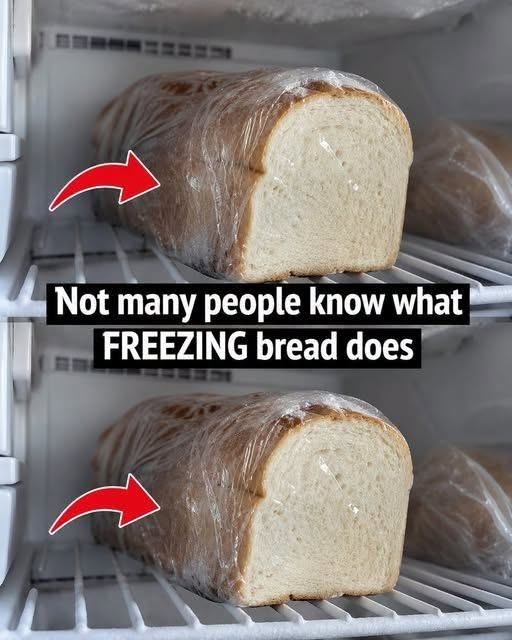
Step 1: Cool Completely
If your bread is freshly baked, let it cool completely before freezing. Freezing warm bread creates condensation, leading to ice crystals and soggy crust.
Step 2: Decide How to Freeze
Whole loaf: Freeze the entire loaf as-is for convenience.
Sliced bread: Slice the bread before freezing so you can take out individual slices without defrosting the whole loaf.
To freeze slices: Place a piece of parchment paper between each slice to prevent them from sticking together.
Step 3: The First Wrap
Wrap the loaf or slices tightly in plastic wrap or aluminum foil. Press the wrap directly against the surface of the bread to remove as much air as possible. This is the first barrier against moisture loss and freezer burn.
Step 4: The Second Wrap
Place the wrapped bread into a heavy-duty freezer bag. Squeeze out as much air as possible before sealing. This is the second barrier.
Step 5: Label and Date
Label the bag with the type of bread and the date. Bread can be frozen for up to three months.
How to Thaw Frozen Bread
Proper thawing is just as important as proper freezing.
For a whole loaf: Remove the bread from the freezer and let it thaw at room temperature for 1-2 hours, still wrapped. This allows the moisture to reabsorb slowly.
For individual slices: Take out as many slices as you need and toast them directly from frozen, or let them thaw at room temperature for a few minutes.
For the oven: If you want a crusty, freshly-baked texture, preheat your oven to 375°F (190°C). Remove the bread from its wrappings and bake for 5-10 minutes.
What to Avoid
Don’t refrigerate bread. The refrigerator accelerates staling, making bread go stale up to six times faster than at room temperature.
Don’t thaw bread in the microwave. It makes the bread gummy and unevenly heated.
Don’t refreeze thawed bread. Refreezing causes moisture loss and texture changes.
Frequently Asked Questions